
LSO rejected motion seeking withdrawal of TMU’s accreditation, Muslim lawyer supports ‘measured response’
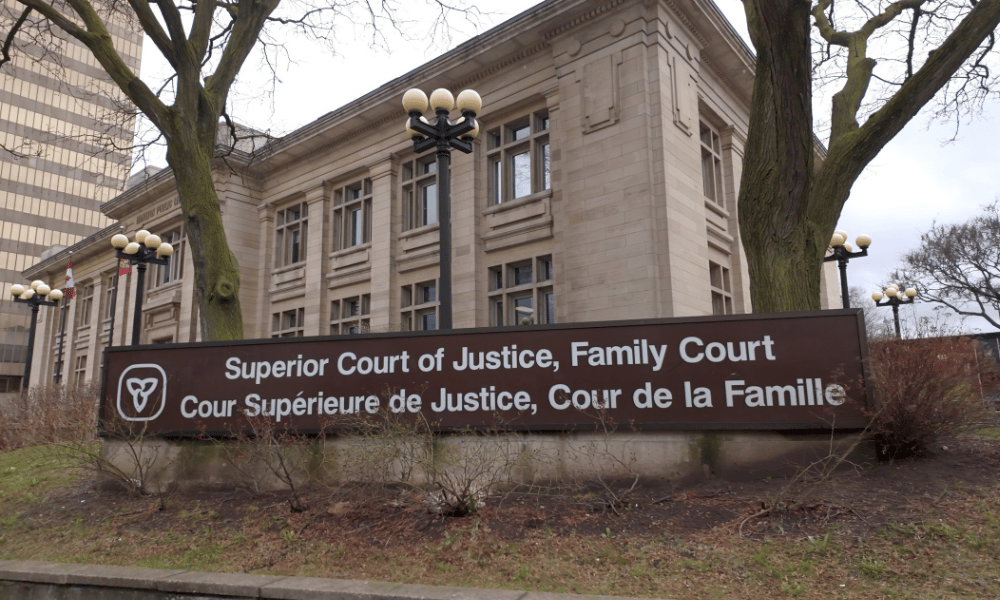
The Canadian Jewish Law Association (CJLA) has criticized the Law Society of Ontario (LSO) for its response to the Benotto report on antisemitism at Toronto Metropolitan University (TMU) and called for regulatory and governmental oversight of the university’s Lincoln Alexander School of Law.
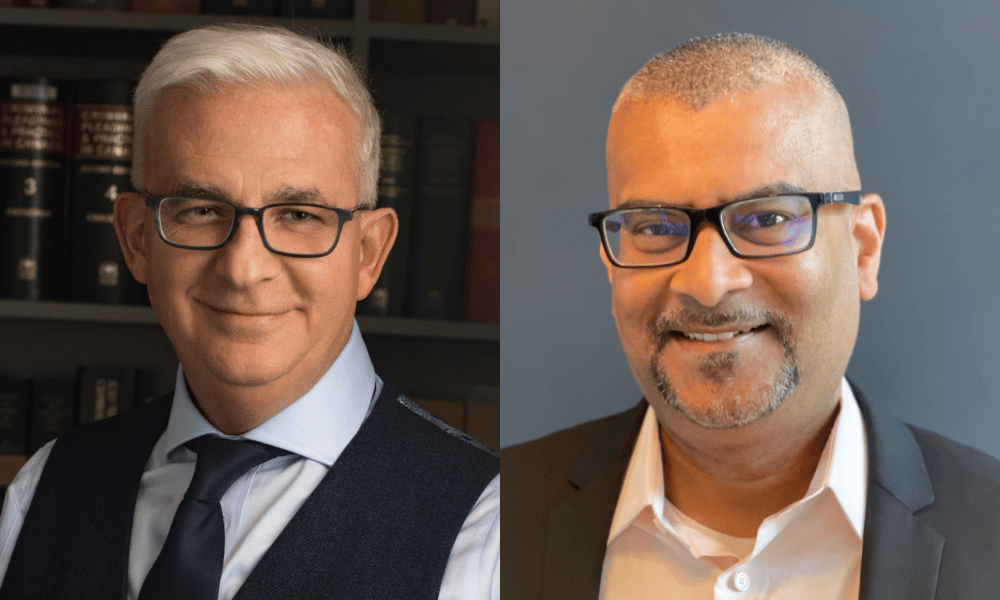
“The LSO is not taking this issue seriously enough,” wrote CJLA chair Joseph Neuberger of Neuberger & Partners LLP in an email response to a request for comment from Law Times. “We do not need further studies, or reports, but immediate and determined steps to make changes at the law school as well as the university [subject to] oversight by government and our Law Society to ensure those who graduate are not perpetuating harm that will further erode our societal values.”
On September 10, Law Society Treasurer Shalini Konanur released a statement asserting that the antisemitism experiences described in the report “are deeply concerning and must be taken seriously,” but that the LSO would not consider its responsibilities regarding the law school until after TMU had completed and acted on its review of the report.
Previously, the LSO had ruled out of order a motion seeking withdrawal of the law school’s accreditation, on the basis that it had missed the filing deadline for the law society’s annual general meeting.
Faisal Kutty, a lawyer and law professor at Southwestern Law School who sits on the steering committee of York University’s Islamophobia Research Hub, supports the “measured response” the treasurer’s statement takes to the accreditation motion. Kutty co-founded the Canadian Muslim Civil Liberties Association and the organization now known as the National Council of Canadian Muslims, and is known for his work on civil liberties.
“I have, however, raised a concern about its statement specifically naming antisemitism while referring to anti-Palestinian racism and Islamophobia only indirectly as concerns of ‘other groups,’” he wrote in an email response to a request for comment from Law Times.
TMU announced Benotto’s appointment in November 2025, initially to examine the Sept. 19, 2025, disruption of a Democracy Forum event hosted by the Dais, TMU’s public policy and leadership think tank. The event, which featured federal artificial intelligence minister Evan Solomon, ended in the arrest of a student.
Benotto’s terms of reference were later expanded to take in a second incident: the November 5, 2025, disruption of an off-campus event hosted by Students Supporting Israel at TMU, which ended with multiple people hospitalized, among them the keynote speaker and eight protesters. Protesters affiliated with Students for Justice in Palestine at TMU were involved in both incidents.
Benotto’s final mandate directed her to investigate a complaint arising from the November 5 event, provide a fair and impartial account of September 19 and the arrest that followed, and assess TMU’s policies, procedures and practices relating to expression, campus safety and event management.
The report, released August 14 under the title “Toronto Metropolitan University External Review 2025-2026,” concluded that TMU has policies capable of addressing much of the conduct it examined, but too often failed to apply them consistently and decisively. The absence of clear enforcement, combined with ambiguity around free expression and protest, contributed to escalating tensions and a perception that disruption carries few consequences.
Benotto recommended that TMU recognize that discrimination against Jews manifests through opposition to Zionism and, on that basis, adopt the International Holocaust Remembrance Alliance (IHRA) working definition of antisemitism as an educational and policy framework, while affirming that criticism of Israeli government policy remains protected expression.
That recommendation departs from the conclusion of TMU’s previous external review. In 2024, retired Nova Scotia chief justice J. Michael MacDonald examined an open letter signed by students at the Lincoln Alexander School of Law, found that the signatories had not breached the university’s non-academic code of conduct, and declined to endorse the IHRA definition, concluding that there is no universally accepted definition of antisemitism.
The Benotto report contained more than 10 redacted pages, including eight that addressed the November 5 off-campus event. The report states that those portions were withheld to protect the integrity and confidentiality of proceedings under TMU’s policies. The Centre for Israel and Jewish Affairs (CIJA) called the redactions alarming and said what was needed was transparency, humility and a commitment to action.
In response to the report, TMU President Mohamed Lachemi created a President’s Implementation Task Force on Campus Expression, Antisemitism and Community Safety, chaired by Bob Rae, the former Canadian ambassador to the United Nations. Its mandate is to respond to Benotto’s recommendations and deliver an implementation blueprint by March 2027. TMU announced the task force without adopting any of the report’s recommendations.
Neuberger is concerned about what he calls “serious fundamental and deeply embedded problems that not only marginalize Jewish students but seek to spread false information and propaganda that by design promote antisemitism.”
As Neuberger sees it, structural change, not further investigations and reports, is needed.
“I do not want to see what we have now from TMU and its law school continue without immediate and meaningful structural change where all students, including Jewish students, can speak freely, express ideas and feel safe.”
Kutty agrees that concerns about antisemitism as described in the report should not be minimized.
“Quite the opposite — they are serious and should be addressed.”
His concerns relate to consistency and academic freedom.
“The report declines to recommend formal adoption of the ACLA [Arab Canadian Lawyers Association] definition of anti-Palestinian racism partly because it incorporates contested historical and political propositions, while recommending IHRA and recognition that discrimination against Jews can manifest through opposition to Zionism.”