

Superior Court says client’s remedy against lawyer lies with Human Rights Tribunal
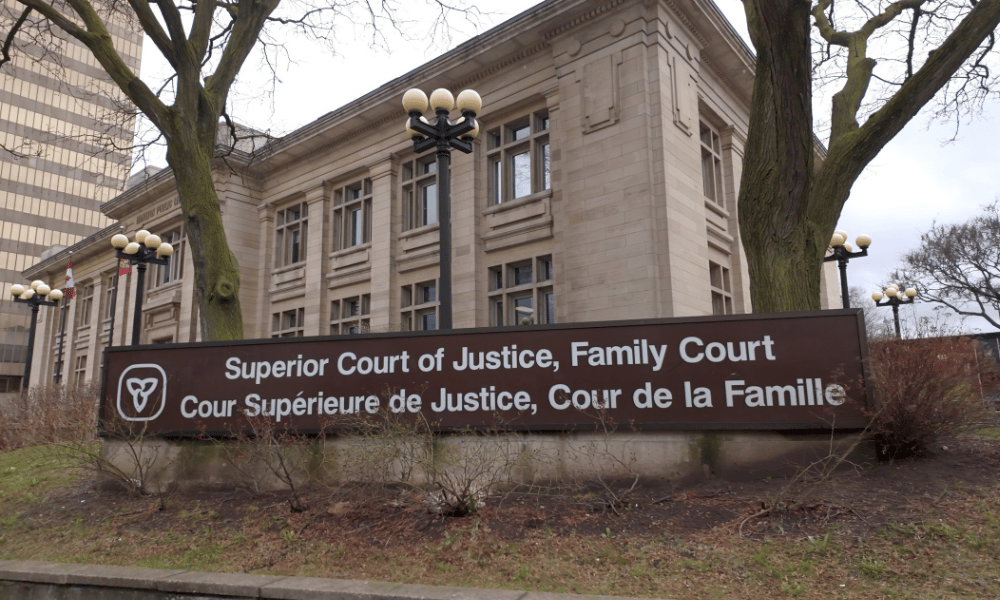
According to the Ontario Superior Court, the remedy of a client alleging discrimination against their lawyer lies in an action or in an application to the Human Rights Tribunal of Ontario, not on an assessment of accounts.
On July 8, 2020, the applicant in Porter v. McKenzie Lake Lawyers, LLP, 2026 ONSC 4787, retained the respondent law firm to represent him in a family law proceeding, with the individual respondent as the lawyer of record and supervising lawyer.
Fifteen accounts, rendered during the retainer, amounted to $95,993.68. On July 10, 2022, the applicant terminated the lawyers’ retainer and began representing himself.
On Aug. 25, 2022, the applicant initiated assessment proceedings.
Throughout the assessment, at each appearance, and during the present motion, the applicant received accommodations to assist with his attention-deficit/hyperactivity disorder (ADHD) and memory processing and recall issues.
For instance, the applicant could record the proceedings for notetaking purposes and deliver a written reply after the hearing.
The applicant complained about the lawyers’ conduct during the retainer. He wanted the assessment officer to treat his ADHD as a human rights issue and consider his expectation of discounted legal services due to his ADHD.
In February 2025, the assessment officer ordered the applicant to pay $92,044.94, comprising:
While acknowledging the applicant’s position, the assessment officer determined that she lacked jurisdiction over the lawyers’ alleged failure to accommodate the applicant’s ADHD, an issue beyond an assessment’s scope under the Solicitors Act.
The applicant moved to oppose the confirmation of the assessment officer’s May 7, 2025, report and certificate of assessment under s. 6(9) of the Solicitors Act and r. 54.09(2) of the Rules of Civil Procedure, RRO 1990, Reg 194.
The applicant asserted that the assessment officer:
The Ontario Superior Court of Justice wholly dismissed the applicant’s motion and ordered the issuance of the May 7, 2025, report and certificate of assessment.
The court confirmed the assessment officer’s decision upon finding no procedural unfairness, bias, or basis to interfere.
Regarding the lawyers’ alleged failure to produce their entire file, the court agreed with the assessment officer’s finding that the lawyers only had to produce what was necessary to satisfy the relevant onus.
As for the alleged failure to call every timekeeper as a witness, the court saw no error in the assessment officer’s conclusion that the supervising lawyer’s evidence met the law firm’s burden, given the absence of significant dispute over the non-witness timekeepers’ entries.
Regarding the lawyers’ alleged failure to accommodate the applicant’s ADHD, the Superior Court saw no authority to support the applicant’s position and no error in the assessment officer’s conclusion.
Given that an assessment under s. 6 of the Solicitors Act concerned the sole question of whether a solicitor’s account was fair and reasonable, the court ruled that the assessment officer’s statutory jurisdiction did not cover a solicitor’s alleged failure to accommodate.
The Superior Court ordered the applicant to pay the lawyers’ requested partial indemnity costs of $17,955.02, including HST and disbursements.
Here are some other recent Ontario decisions that touched upon human rights.
On Apr. 21, the Ontario Divisional Court set aside interim and reconsideration decisions of the Ontario Human Rights Tribunal, except in relation to allegations it had not dismissed, based on its unfair and unreasonable conflation of two hearings.
On Jan. 23, the Ontario Court of Appeal awarded damages under s. 137.1(9) of Ontario’s Courts of Justice Act, 1990, upon dismissing the respondent’s counterclaim against an appellant who had sought damages for violations of Ontario’s Human Rights Code, 1990.
Enjoy this story? Read the latest human rights law news on the main page!