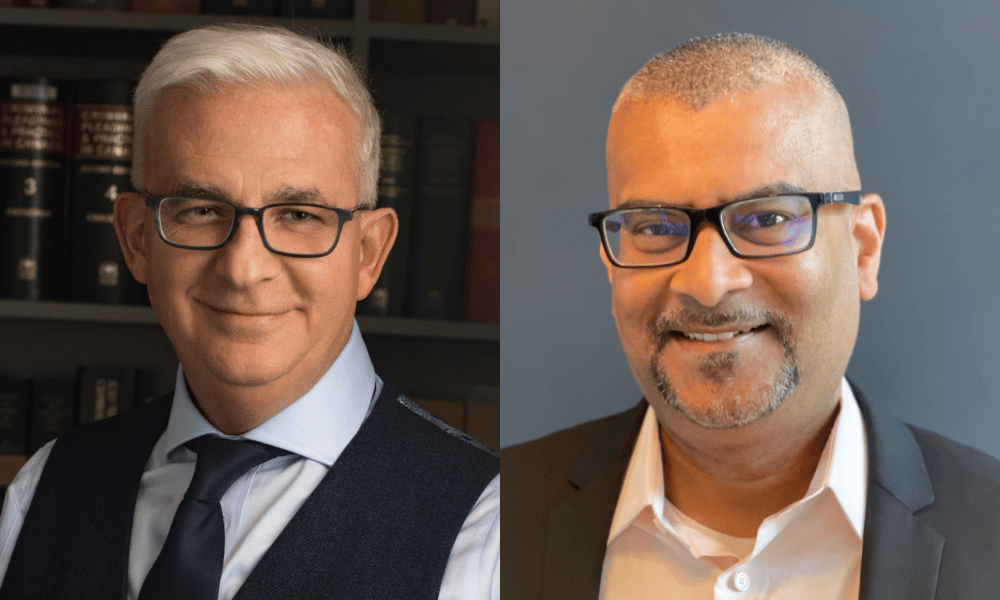

McLeish Orlando’s Brandon Pedersen on new auto insurance risk and the cracks nobody’s fixed yet

Studying auto insurance policies to know what’s covered and what isn’t — and what that means in practical terms — is low on the priority list for most people. Until, that is, they’re in an accident.
“They don’t know what they need until after they need it; by the time they come to us, it's after they need it,” says Brandon Pedersen, associate at McLeish Orlando LLP. “We're always working on crafting creative solutions to make sure our clients don't fall through the insurance cracks. Many of those solutions have always existed, but they’re about to become much more pertinent.”
Those cracks widened considerably on July 1, when Ontario’s Statutory Accident Benefits Schedule (SABS) was overhauled. The amendments turned previously standard benefits into optional add-ons: income replacement and caregiver expenses, for example, now require drivers to opt in to new policies and pay extra, rather than coming bundled into every policy automatically. Basic medical and rehabilitation coverage remains mandatory, along with attendant care.
Further, even when purchased, those optional benefits aren’t available to just anyone. They’re now restricted to the policy’s named insured, their spouse, dependants, or listed drivers — a narrower group than before, when the injured party could claim against another policyholder’s insurer.
“There's going to be a gap in what people were able to claim for before these changes versus after, depending on whether optional benefits were opted into,” Pedersen notes. “Our job is to prevent financial free fall and any hindrance to the client’s medical recovery.”
The workarounds also became much more urgent. Personal injury firms are now expediting the solutions they've always relied on: getting to a lawsuit as quickly as possible and pursuing advance payments from defendants to cover initial costs. Pedersen predicts litigation loans will become more common too, for clients who can't afford to go without a paycheck or cover expenses like visitor costs out of pocket.
It’s always been standard practice to get information about a policy of insurance at the outset, walking clients through what they’re entitled to and what they’re not so they’re aware of what the future will hold. But pre-July 1, most people had the same level of coverage. Now, “we’re really honing in on specific benefits,” Pedersen says, pointing to the income replacement benefit (IRB) as an example.
Clients have historically relied heavily on IRBs to stabilize their finances right after an accident, but many will no longer have that safety net. Short- or long-term disability policies, employment insurance sickness benefits, or Canada Pension Plan benefits will need to fill the void — assuming the person qualifies. Someone who isn’t a traditional employee or whose employer never paid into the program may not.
“While these supplements existed before, IRBs have been quickest way to get money to the client,” Pedersen says. “We as lawyers now have to think about these alternatives right from the outset and get applications in for whatever can get financing to the client as soon as possible.”
The changes don’t apply retroactively: if a policy was already in place before July 1, the benefits attached to it continue as-is after July 1 unless the policyholder sends written notice or explicitly tells their insurer to remove specific benefits. On renewal of an existing policy, benefits will remain the same, unless the person specifically requests to remove certain benefits. This is the “opt out” part of the changes. However, people will likely be made aware of the costs of each benefit, which may cause them to remove benefits to save money. Known as the renewal trap, this dynamic means people are likely not to understand what they're losing.
While more consumer choice is great in theory, allowing people the autonomy to make decisions on what best suits them, “in a down economy where Ontarians are struggling financially, fewer people will be inclined to pay for things that are considered optional,” Pedersen notes.
“People are looking for ways to save money, and insurance premiums now offer that opportunity. Common sense would dictate that if somebody can save a buck here or there, they're going to do that — and then they won't realize what saving a couple dollars a month means in the event that they’re injured in an accident and need the benefits they chose not to keep or opt into.”
The general public is at risk simply by being less attuned to the practical impacts of these changes than people who work in this space every day, such as insurance professionals or personal injury lawyers. But one group stands out as most exposed: people who don’t have auto insurance and don’t qualify under someone else’s policy as a spouse, dependant, or listed driver.
Many Ontarians have no auto insurance because they don’t use a car as their method of transportation, depending instead on their bicycle or public transportation. Under the previous system, if a cyclist without insurance of their own was struck by a vehicle, they could claim against the driver’s insurance company for the full suite of benefits. Now, they can only count on the three that remain mandatory: medical, rehabilitation, and attendant care.
“We’re hoping that insurance companies will offer some form of auto insurance coverage for people who don’t have a car, to fill in these gaps,” Pedersen says. “It’s still so early that the public and the insurance industry alike have not quite grappled with the practical effects but over the next six months to a year, as we see more people fall victim to this system, there’s going to be demand for reform and perhaps introduction of additional policies.”
Not every change to SABS is a loss. For example, housekeeping and home maintenance benefits are now available to add on to an insurance policy where previously they were only available to those who were catastrophically injured. Another silver lining is the shift in priority of payment: auto insurance now pays first, ahead of extended health plans (except for medications), which Pedersen says clinicians have told him simplifies their side of the process considerably.
Still, Pedersen doesn’t shy away from the fact that overall, these changes create new gaps or worsen existing ones. Personally and professionally, he’s doing all he can to ensure people grasp the nuances of the new regime and review policies carefully.
“Don’t just treat it as an annual renewal where you sign off and send it back; speak with your broker, ask questions, make sure you're covered appropriately and adequately, and seriously consider the optional benefits available to you,” he advises. “Know that you can’t add those retroactively after an accident. Whatever you have at the point in time of an incident is what you're going to get.”
Pedersen’s hope is that the consequences of the reform are so significant and obvious that much-needed support, such as coverage options for non-drivers, is imminent.
“We're taking it in stride,” Pedersen says, and adds that his firm will “continue to fiercely advocate for the clients that come through the doors of McLeish Orlando, as well as the broader public overall.”
This article was produced in partnership with McLeish Orlando