
She intends to balance the needs of the public with the needs of licensees
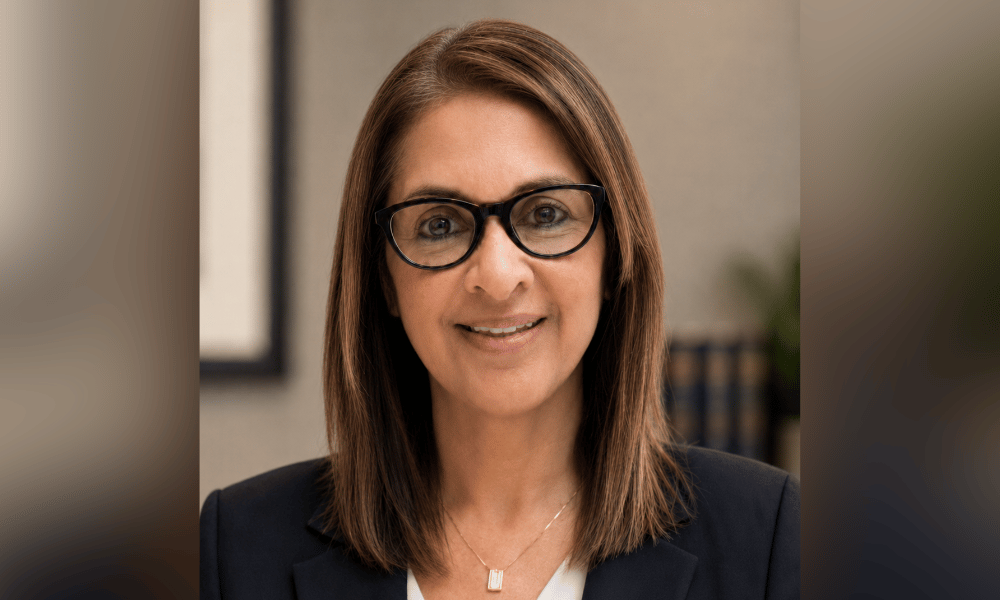
Shalini Konanur wants to modernize the Law Society of Ontario – making it more transparent, more accessible, and better equipped to support licensees as they navigate rapid technological change. Elected treasurer of the Law Society of Ontario on June 18, she enters the role knowing her biggest constraint is the one thing she cannot manufacture: time.
Time is on Konanur’s mind for a lot of different reasons. Partly, it’s because the LSO is in its final year of a four-year electoral term. Partly, it’s because, with her new responsibilities, Konanur is re-evaluating all her pre-existing commitments. It’s also because the LSO is undergoing a sweeping process of governance reform with many agenda items still to be decided, and partly because of the nature of Convocation (the LSO’s governing board) itself, and the passions that the LSO’s members bring to debates about the LSO’s future. And finally, it’s because of the ambitions Konanur has for what she wants to accomplish in the role, which include modernizing the LSO and increasing its level of transparency, improving public outreach and access-to-justice issues, doing a better job of communicating with the members the LSO serves and regulates, and helping the LSO’s licensees deal with the changes being forced on the profession by the evolution of technology.
But she’s optimistic about the LSO’s future and what she’ll be able to accomplish, even if it means adjusting her expectations and hopes a little bit.
“When you take a leadership role on, you have a lot of big ideas, and then you realize, ‘okay, I’ve got to bring that down right to a list of actual pragmatic things,’” says Konanur, emphasizing that no matter what happens or changes, communication with all parties involved will be the key.
“I want to make sure that our licensees feel like they understand what’s going on, and that we’re not a closed door, and that they can actually interact with their regulator.”
The first topic that comes to mind when Konanur discusses why she ran for treasurer is access to justice. Currently the executive director of the South Asian Legal Clinic of Ontario, she says her lifelong experience in the legal-aid-funded clinic sector is something she believes no other treasurer has had.
“I’ve worked with thousands of our most vulnerable clients in Ontario for the past 25 years. My view about protecting the interest of the public is really, really defined by that experience, and being in the trenches. Until last week, I was doing casework.”
Konanur has a desire to support – and reach out to – women facing violence, and people from the Two-Spirit, lesbian, gay, bisexual, transgender, queer and more community experiencing discrimination, and immigrants, and those who get classed as low-income, and others, but there is one typically neglected group that she feels needs some particular attention and that’s the people who earn enough not to qualify for low-income, legal aid support, but who still don’t earn enough to feel comfortable engaging with the legal system. She says these are increasingly the people who have turned to self-representation, and these are the people whom the system is failing.
Along with her work in the legal-aid sector, Konanur says her own identity as a member of the South Asian community and as the first racialized woman elected treasurer will also enable her to better advocate for diversity in the judiciary and on the LSO’s bench. She says her election also demonstrates that the LSO is moving further along the road to diversity and equity.
“I’m really grateful for all of my colleagues who saw the opportunity for us to open doors and have people who think they can’t get into or belong in these institutions know that they can. I've gotten thousands of messages on that point, and people are feeling just really happy to see those things happening.”
The LSO’s governance review task force issued its report at the June Convocation. The conclusions in the 23-page document mostly maintained the status quo: no regional reform, no restrictions on group campaigning, no prioritization of a spending-limits regime. It deferred making any changes regarding block or slate voting, noting that “Convocation may wish to consider changes in the future.”
The one decision reiterated in the document was the April approval to reduce Convocation membership from 53 to 37 and to appoint three benchers to support Francophone, Indigenous, and other identified representation needs. These are big changes, and they are not universally supported by all LSO members. But Konanur says that’s fine, and debate about issues is healthy. And it’s something she herself has engaged in, often siding with unexpected people or positions or not agreeing with people who seem to be her natural allies in Convocation. Those discussions have made her “stop and think” as she has stepped up into her leadership role, even if they lead to outcomes that aren’t her first preference.
“What makes me feel good is that we have talked about and thought about these perspectives, and then as a group we’ve had all the information we need to come to the decision that we think is the right one,” she explains, noting that there are some conditions she expects to govern debates – that people remain civil and professional and that they remember they are there “to regulate in the public interest and to help our licensees practise – that is the foundational bottom line for me.”
As for the issues left untouched or undecided in the report, Konanur says the report is just a starting point. She doesn’t want the committee or the LSO to feel pressured into making quick decisions, just for the sake of doing so, especially without taking into account the effects on licensees, the public, or the LSO itself, as well as its administrators who would have to operationalize and institute all of the changes.
If there is one working concept that Konanur wants to adopt from the legal-aid world, it’s modernization. While she admits it’s an “opaque” term, she says a large part of it is shining sunlight on processes and being transparent. That means doing things like reporting on executives’ salaries at the LSO. It means engaging with members and soliciting their thoughts and opinions. It means communicating better overall and being very clear about what the LSO is doing, why it’s taking those actions and how it’s spending its licensees’ money.
“As a licensee myself, I would like to see those things.”
Konanur also wants to see the LSO lead and support its members as they grapple with emerging issues, including generative AI and other new technologies, that are making their presence known. She believes that, as an organization that provides guidance to its members, the LSO needs to step up and lead in this area.
“I think the mistake that all of us make, and it happens in my advocacy work with government, is that we get behind the times, and then sometimes we are too late in our guidance. We really have to drill down and think about what we can do to support our licensees [when it comes to technological change].”
Even before becoming treasurer, Konanur was actively involved in the LSO and was a very busy committee member. She co-chairs the Equity and Indigenous Affairs Committee, serves as a hearing adjudicator at the Law Society Tribunal, belongs to the Audit and Finance Committee, the Law Foundation Ontario Board, the Paralegal Future Vision Working Group, the Alliance for Sustainable Legal Aid, and the Strategic Planning and Advisory Committee.
She knows that’s just too much given her new role, especially since she wants to spend time engaging with the public, so she plans to step away from a few committees. Konanur hasn’t decided which ones she’ll stick with and which ones she’ll back away from yet, but she’s already consulting with colleagues. Konanur wants to ensure that she doesn’t disrupt any of the work that the committees have done over the past four years.
Another key consideration for Konanur is that she wants to see new benchers and benchers who haven’t stepped up into those kinds of roles before take the plunge and join, but she knows that they might need some support before that can happen.
“I’d love to move people into some of the positions and some of the appointments I held.”
By getting the best out of everybody involved and making sure that the LSO is keeping the needs of all relevant parties – members of the legal profession, the public and even government – in mind, Konanur feels that the LSO is well set for the future, even if law societies in other provinces, such as British Columbia, are facing challenges.
As the LSO grapples with questions about how to improve access to justice, how to improve its own governance model, how to be transparent, how to help licensees better manage their practices, and what equity looks like to the LSO, Konanur is confident the LSO is on the right path.
“They’re all the right questions to move us forward and be strong.”