
Elected benchers will maintain a majority at Convocation under the new governance structure

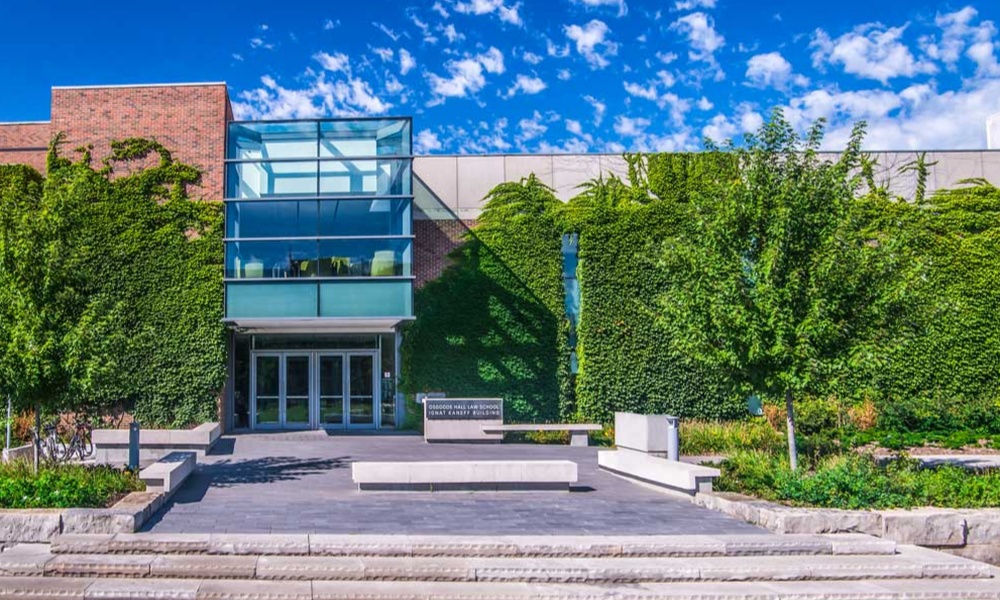
The Law Society of Ontario is moving forward with plans to overhaul its governance structure, with benchers passing five motions on Thursday to reduce the number of seats on the regulator’s governing board by about 30 percent and specify who can fill those seats.
According to the task force that introduced the motions, the primary goal of the changes is to improve the efficiency of the current board, which has 53 seats – nearly two dozen more than the Law Society of British Columbia, which has the next-largest board among legal regulators in Canada.
One of the approved motions would reduce the LSO’s board to 37 seats. Twenty-four of those seats will be filled by elected lawyers, giving them a majority of about 65 percent. The remaining seats will be filled by four elected paralegals, six lay benchers appointed by the Lieutenant Governor in Council, and three benchers selected by the board itself.
Those three benchers must include one Francophone licensee, one Indigenous licensee, and one licensee with “specified attributes.”
The LSO plans to submit the proposed changes to the Ontario Attorney General for consideration. If approved, the changes would be reflected in Ontario’s Law Society Act. The development comes a day after the BC Supreme Court affirmed the constitutionality of legislation that will replace the LSBC with a new regulator and reduce the bar’s power to self-regulate.
Benchers discussed the motions for more than an hour on Thursday, at the LSO board’s second meeting of the year, before casting their votes. While many vocalized their support for the proposed changes, multiple benchers noted that they failed to address a key issue: reforming the law society’s system for electing benchers.
Since 2019, the makeup of the LSO’s board has been politically divided between two factions, the FullStop or StopSOP slate and the Good Governance Coalition. The former came together in response to the regulator’s requirement that licensees promote equality, diversity, and inclusion through their work.
“Slates and coalitions are undemocratic,” said bencher Jonathan Rosenthal, who added that he had been part of the Good Governance group. “Every single person in this room, with the exception of [former LSO bencher] Etienne [Esquega], is only here because of the slate or coalition that they decided to run on, and that process is wrong.”
Rosenthal said that under the LSO’s current voting structure, only lawyers and paralegals on one of the slates have a chance of being elected. Instead of voting for individual candidates, licensees are forced to vote according to which slate they want to hold a majority on the LSO’s board.
“It’s wrong that the electorate is only given a choice between two competing slates,” the bencher argued, but said he would still support the motions.
Another bencher, Stephen Rotstein, called the election process “heavily flawed,” noting that running for a bencher seat costs a lot of money.
“I had the privilege of being part of a coalition that had money to run for bencher, but as an individual, as somebody who works in the public sector, [it] would be impossible for me to run,” Rotstein said. “That leads to the conclusion that a lot of people who come from diverse backgrounds, whose views would be well served for being in Convocation, don’t have the financial means to run.”
Rotstein argued the LSO needed to set spending limits for candidates, but he’s “been told it’s too complicated,” he said. “I don’t believe it’s too complicated. I believe we are smart people, and we can figure out a way to address that.”
But Lisa Bildy, a member of FullStop, argued the slates actually made the election process more democratic.
“As Stephen just pointed out, it’s very costly to run for bencher,” Bildy said. “What happened was we ended up getting a whole variety of people with diverse perspectives into Convocation who might not otherwise have gotten there. And those were primarily small and solo firm representatives.”
Another issue that sparked debate was the motion proposing that the board must appoint one Francophone licensee, one Indigenous licensee, and one licensee with “specified attributes.” According to Geneviève Painchaud, the lay bencher who introduced the motions, having Francophone and Indigenous appointees ensures that there is consistent representation of both Francophones and Indigenous peoples, constitutionally protected groups. The third appointee would be selected based on skills, experiences, or perspectives that the board believes are not represented by the other benchers.
“All of these three appointments would follow a very transparent public process,” Painchaud said.
Sidney Troister, an elected bencher from Toronto, said the requirements raised several questions.
“Do we still appoint another Francophone or Indigenous person when they have already been represented, having been elected? The supposition is there will always be that gap,” Troister said. “That may not be the case, but our hands will be tied by this proposal.”
He added that this arrangement left only the third seat available to address other groups or skill sets not represented by other benchers, such as people of colour, family lawyers, employment lawyers, or solicitors.
“What is the need to have these fixed-seat stakeholders at the table when there may be any number of other gaps that need to be filled?” Troister said. “And dare I ask, who defines an Indigenous person or a Francophone? Francophone by birth, by upbringing, by education, by schooling, by language facility? And what makes someone Indigenous? What is the criteria?
“We know that there have already been scandals of late where writers or academics, for example, were challenged on their background and found to be not what they said they were,” he added. “What if there are no qualified – by our standards – people to fill the seats? What then? The best of a bad lot? Vacancies?”
Later, Esquega, who noted he was the only Indigenous bencher, pushed back.
“We need to bury our political ideologies here,” he said. “We need to look at the realities of the North. Look at our dockets, completely overwhelmed with Indigenous people in the docket every single day, right across the North. Look at our jails, completely overrepresented. Look at our child welfare system, completely overrepresented.
“It's clearly an issue that Indigenous people interact with the justice system more than any other society or people in the North,” he said, adding, “It’s a no-brainer that you should have a representative who’s Indigenous sitting at this board.”
The LSO first introduced a proposal to reform its governance model in 2024, shortly after BC enacted legislation to reform its own legal regulator. The proposal looked to reduce the size of the LSO’s board from 54 benchers to 30. It also aimed to slash the proportion of elected lawyer benchers on the board, so that they no longer constituted a majority.
This latter proposal sparked criticism amongst members of Ontario’s legal community, who worried that the change would hurt the bar’s ability to self-regulate.
On Wednesday, LSO treasurer Peter Wardle said the amended proposal reflected the feedback the regulator received from several stakeholders over the past year. He did not identify the stakeholders but said most supported reducing the size of the regulator’s board.
Shalini Konanur, a bencher who is also executive director of the South Asian Legal Clinic of Ontario, noted that for many of the clients she works with, “the law society feels like a very far away place.
“They’re not thinking about the size of Convocation. They’re not thinking about committee structures. They’re not thinking about bylaws,” Konanur said. “But they do feel the consequences of how well we govern, probably more than anybody else.”
She said she supported the reforms “because I think the public – especially the public that is heavily, heavily captured by the justice system – needs a law society that can act with clarity, with discipline, and with urgency.”
Konanur added, “Governance is one of the ways we can either meet or we can fail to meet our obligations to the public.”