
Court finds abuse of process and restricts former lawyer's role pending settlement approval
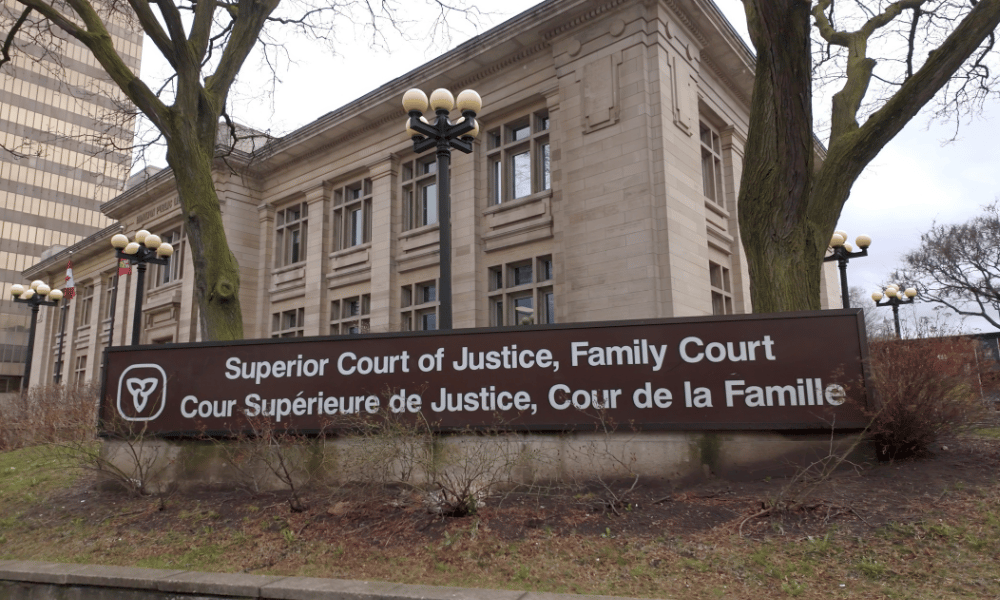
The Ontario Superior Court of Justice has found that parties reached effective settlements in a motor vehicle accident lawsuit and a related accident benefits claim, rejecting the injured plaintiff's family's attempts to challenge the agreements.
In Khedri et al. v. Puranen et al., 2026 ONSC 5095, the court confirmed that the parties settled the accident benefits claim in August 2022 and the tort action in July 2023, subject to court approval. It also found that the family had engaged in abuses of process and restricted their former lawyer’s continued involvement.
The litigation arose from a September 2011 accident in which a vehicle struck Yama Khedri while he was riding his bicycle. He suffered multiple severe injuries, including a traumatic brain injury, cognitive impairment, skull fractures and internal injuries.
His brother, Javid Khedri, acted as his litigation guardian. Other family members pursued claims under the Family Law Act. The court subsequently appointed the Public Guardian and Trustee as Yama's litigation guardian, with the parties' consent, partly because Javid had not acted in Yama's interests.
In August 2022, the parties negotiated a $1,075,000 accident benefits settlement. The agreement allocated $850,000 to attendant care and medical rehabilitation, $205,000 to non-earner benefits and $20,000 to housekeeping.
In July 2023, the parties reached a separate tort settlement providing $312,380 in damages and $250,000 for costs and disbursements, according to Javid's sworn evidence.
However, Javid refused to complete the settlement documentation amid disagreements over legal fees and disbursements. The family later disputed both settlements and challenged their former lawyer’s continued involvement.
The Superior Court applied established contract principles requiring mutual intention to create a binding agreement and agreement on essential terms. It found that Javid expressly accepted the accident benefits offer by email and never withdrew those instructions.
Javid signed the accident benefits settlement disclosure notice in September 2023 but did not sign the accompanying release. The court nevertheless found that the parties had reached an effective settlement, while distinguishing the existence of the agreement from the requirement for court approval.
The court also considered the family's conduct after the negotiations. Between August 2022 and November 2024, the family paid approximately $173,000 from the accident benefits settlement funds for attendant care and housekeeping.
The court found that these payments, together with Javid's sworn acknowledgements of both settlements, supported its conclusion that the family had accepted the agreements.
It rejected the family's allegations of undue influence and found that the other Family Law Act claimants lacked standing to challenge Yama's accident benefits settlement.
The court concluded that the family, particularly Javid, had engaged in abuses of process. It found that the family had taken inconsistent positions throughout the litigation and contributed to delays, including by challenging settlements it had previously acknowledged.
The court also found no basis to set aside either settlement.
On the conflict-of-interest issue, the court permitted the former lawyer to represent the Public Guardian and Trustee solely for the settlement approval motion. It barred him from acting in other matters concerning Yama's affairs because he could become a witness in future proceedings involving payments made from the settlement funds.
The court has not yet approved the settlements. It directed the Public Guardian and Trustee to file settlement approval materials. The court will consider whether the settlements serve Yama's best interests during the subsequent approval proceedings.