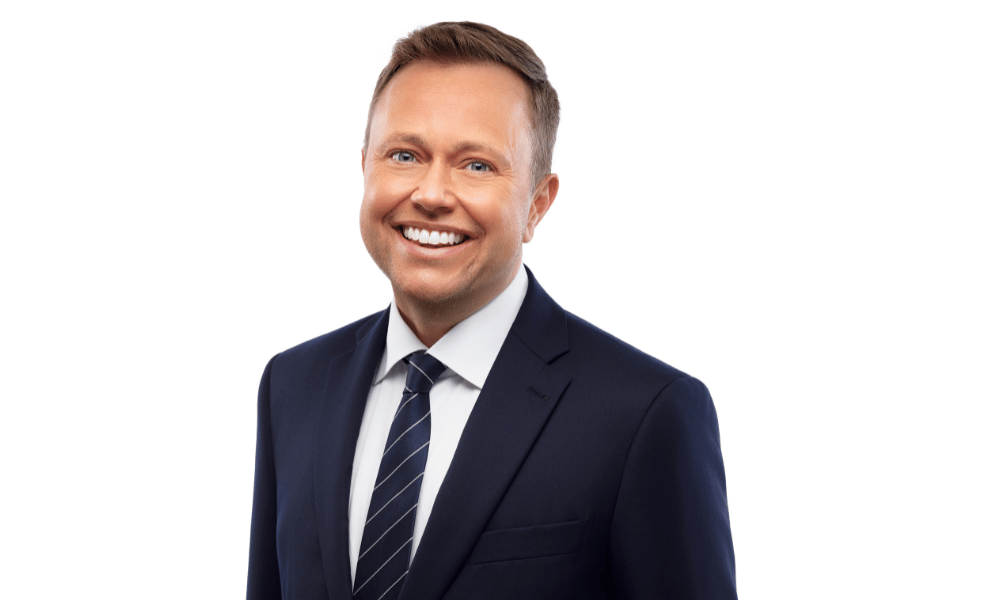

Wameed Ateyah, once Schomberg’s only family doctor, was convicted on 16 counts

The Ontario Court of Appeal tossed out a Schomberg, Ont. doctor’s appeal of his convictions for sexually assaulting 13 patients on Tuesday, finding that a trial judge did not err when she issued a universal ruling that allowed the Crown to use the same evidence across more than a dozen counts of sexual assault and exploitation.
The issues in R. v. Ateyah revolve around so-called similar fact evidence. Prosecutors are generally barred from using such evidence – i.e., evidence of a criminal defendant’s past disreputable conduct – to support their arguments if that past conduct is unrelated to the events before the court.
However, there are exceptions to this rule. In cases where prosecutors aim to use the same evidence to support more than one charge in a multi-count indictment, for example, they can do so if the evidence supports “probative permissible inferences” related to that charge, and the “probative value” of the evidence outweighs its prejudicial effect against the accused.
In a 2-1 decision on Tuesday, Justice Katherine van Rensburg said she believed the trial judge in the case, who entered Dr. Wameed Ateyah’s convictions in 2023, rightly concluded that there was no danger of prejudice when she allowed the Crown to use the patients’ evidence across multiple counts.
The trial judge had acquitted Ateyah of counts involving two patients, but van Rensburg found that the trial judge was still entitled to rely on those patients’ evidence and to rule that all the patients’ allegations were similar enough to warrant a universal ruling.
Finally, van Rensburg said the trial judge correctly concluded that the patients’ evidence could be used across multiple counts, even though there was an “air of reality” to the allegation that it was tainted by their exposure to online information about Ateyah’s misconduct.
Justice Darla Wilson concurred with van Rensburg.
However, Justice David Paciocco dissented in part, writing that he believed the trial judge erred in her evaluation of the tainting issue in relation to two patients. He said he would set aside the conviction related to one of those patients and order a new trial, and modify Ateyah’s sentence for the conviction related to the second patient.
The complainants’ allegations against Ateyah stretch back more than a decade, according to the trial court’s 2023 decision to convict the doctor on 16 counts of sexual assault and one count of sexual interference. At the time that the assaults took place, Ateyah was the only family doctor in Schomberg, which is roughly 60 kilometres from Toronto. He also operated the town's only walk-in clinic.
Each of the complainants is a woman. At the time of Ateyah’s convictions, their ages ranged between 24 and 60, though one of the patients was 17 at the time of the assault. The court did not reveal the ages of two of the women.
The trial court noted that each patient individually alleged Ateyah “concocted reasons to do non-medically necessary examinations or incorrect examinations of the breasts and genitals,” adding that it “strains the boundaries of logic and common sense that this could be a coincidence.
“It is a thread throughout the evidence that weaves the different allegations together,” the trial court said.
At trial, the Crown brought an application for a universal ruling allowing the evidence on each count to be used as similar fact evidence across all other counts. The trial judge granted the Crown’s application, finding that the complainants individually made similar allegations. She also found that the probative value of using the same evidence across all counts outweighed the risk of prejudice against Ateyah.
Ateyah was convicted of his misconduct towards 13 patients and sentenced to nine years in prison. He appealed each of his convictions, challenging the trial court’s admission of cross-count similar fact evidence. Specifically, Ateyah argued that the trial judge was wrong when she concluded that permitting the same evidence across multiple counts presented no danger of prejudice against him.
He argued that the trial judge should not have relied on evidence related to counts on which he had been acquitted, and claimed she had erred in ruling that the patients’ allegations were similar enough to support the universal ruling. He also argued that the trial judge wrongly discounted the risk that each patient’s account was the product of collusion or tainted by other allegations against him.
In the majority opinion, van Rensburg dismissed the appeal in its entirety, finding that the trial judge made no errors. Much of the justice’s opinion focused on Ateyah’s training and collusion argument – the point on which she reached a different conclusion than Paciocco.
The trial judge had concluded that there was a possibility that the patients’ accounts of assault had been tainted by the availability of information about Ateyah’s conduct in the media and the College of Physicians and Surgeons of Ontario’s website. The CPSO regulates physicians in the province.
However, she had also noted that this available information did not include specific details, only that Ateyah had been charged with sexually assaulting female patients at his clinic and had conducted inappropriate pelvic exams.
The trial judge “was entitled to find, as she did, that the only evidence with the potential for tainting was that there were inappropriate pelvic exams,” van Rensburg wrote.
“This was not a finding, as my colleague suggests, that the CPSO website itself contained only general information; rather it was her reasonable conclusion on the evidence that there were no specific details to which the complainants were exposed that could have tainted their evidence and affected the independence of their accounts.”
The justice also declined to reconsider Ateyah’s sentence.
Counsel for Ateyah and a spokesperson for the Ontario Attorney General’s office declined to comment on the decision.