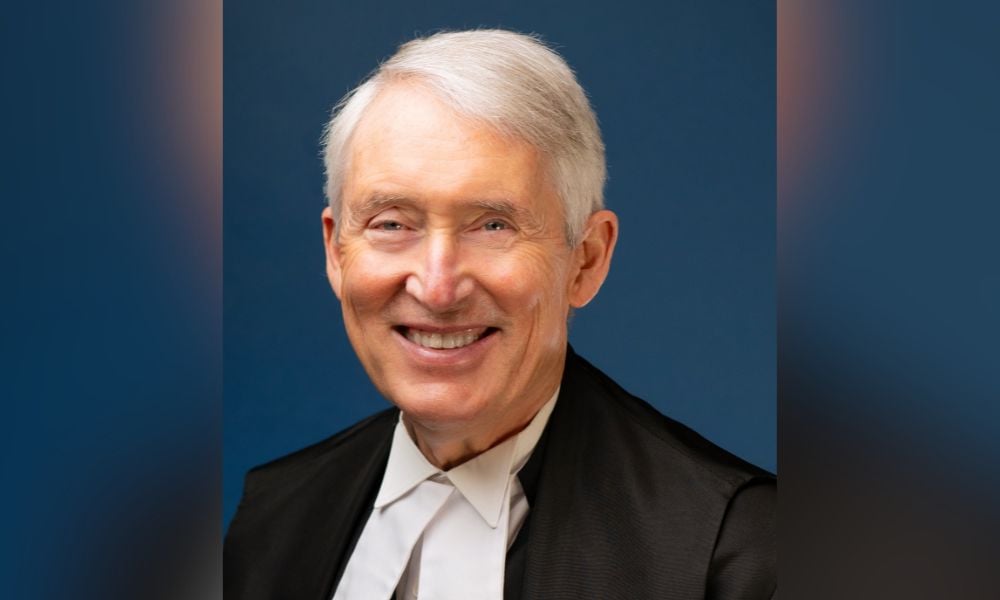

When the scans show nothing: Dale Orlando on prosecuting mTBI claims
Many Canadians have seen it, if not experienced it themselves growing up: a hockey player gets hit and lies on the ice for a moment before they’re helped to the bench on unsteady legs. It’s often called “getting your bell rung” and it’s treated like no big deal; it’s something to be walked off. Players are often back on the ice the very next game if not later in the period.
“There is a perception that concussions are minor injuries, with jurors and insurance representatives arriving at that same conclusion,” says Dale Orlando, principal partner at McLeish Orlando LLP. “They’re classified as mild traumatic brain injuries, but the word mild is not necessarily synonymous with the outcome — you can have a mild injury but very, very significant consequences as a result.”
Concussions, or mTBIs, are one of the most common types of injuries that people sustain when they’re involved in a motor vehicle crash. Statistically, most people recover well and are symptom free within 12 weeks. But there is a meaningful minority who go on to have lasting sequelae and experience long-term impairment that’s far greater than a slight inconvenience.
Unlike a moderate or severe brain injury, where an MRI may show a collection of blood in the subarachnoid space, for example, mTBIs are classified as invisible injuries: there’s no objective evidence of injury on diagnostic imaging. After the accident, the person may even have been able to drive home and not attended the emergency room or visited their family doctor until the next day.
People severely impaired by an mTBI typically have something called axonal shear, where the axons on the nerve cells are severed. No X-ray, CT, or MRI is sensitive enough to visualize that kind of injury at a microscopic level.
“A person without that finding can have just as significant an injury — and often more significant sequelae — but there’s no imaging whatsoever,” Orlando says. “So then, we have to switch gears.”
It takes a disciplined, strategic approach to be successful in any claim, but it’s even more important in cases that involve invisible injuries. The starting point for the firm is assessing credibility. If the person had a life they really enjoyed — a job they liked, good social interaction, athletic pursuits or outdoor activities — that lends credibility to the claim. It’s unlikely they’d disrupt their lives for a few dollars in a lawsuit, Orlando notes.
From there, lawyers look for indicia of severity: a high-speed or high-impact collision, property damage, physical trauma visible at the scene. The contemporaneous record becomes critical, for example whether the person was agitated or complaining of serious pain when speaking to the ambulance attendant or emergency room staff.
Neuropsychologists identify subtle cognitive deficits while lay witnesses — such as friends, neighbours, and coworkers — speak to how the person presents differently before and after the injury.
“Third-party evidence lends credibility to the claim, and that’s what these are: credibility cases,” Orlando explains. “But number one, we need a believable client.”
mTBI claims almost always come down to competing expert testimony. Orlando recalls one case that illustrates that dynamic, involving a client he calls Mr. G. The case went to trial and the plaintiff-side neurologist diagnosed mild traumatic brain injury with significant post-concussion syndrome. The defence expert disagreed, stating that Mr. G should have recovered within three months. If he hadn’t made a full recovery, there must be a pre-existing condition at play — or the plaintiff is embellishing.
On cross-examination, however, that same defence expert was forced to concede that a subset of mTBI patients report symptoms extending well beyond the three-month window.
“That concession led to a positive result for us,” says Orlando. “It becomes a battle of the experts. They’ll attack the credibility of the person, and that’s what these cases often turn on.”
That battle of experts, and the credibility contest at its core, is a dynamic Orlando has navigated for more than three decades. He still considers invisible injury cases among the most difficult to manage and properly prosecute. Much of the challenge stems from the persistent misconception about the severity of these claims — one that fails to recognize that for a small percentage of people, their lives are horribly disrupted by mTBIs.
Whether it's mTBI, debilitating neck or back pain that doesn't show in a scan, or PTSD or other psychological injury, the disciplined and methodical approach is well-established — what's changed is the mindset of those tasked with assessing these claims.
“In my 30 years, there’s been a gradual shift towards greater understanding and acceptance by the public, medical professionals, and insurance adjusters that despite the fact you can’t see it, it still exists; people can be quite significantly disabled without obvious injury on diagnostic imaging,” Orlando says. “Our approach to these cases hasn’t changed, but the arguments land better.”