
How injured Ontarians fall through the cracks between insurance and public health
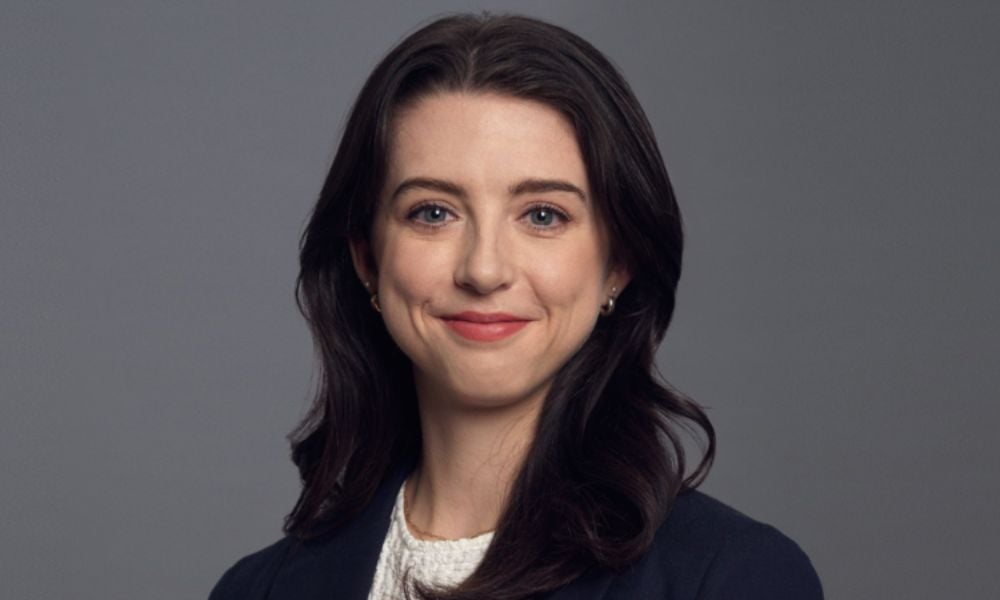
Jamie Davison is often a pedestrian. An associate at McLeish Orlando LLP in Toronto, she walks to work “and all over this city that was not built for heavy pedestrian traffic,” Davison adds. As of July 1, 2026, her commute became significantly more precarious.
Ontario’s Statutory Accident Benefits Schedule (SABS) underwent sweeping changes that shifted several benefits from mandatory to optional, with income replacement benefits (IRB) chief among them. Davison says the potential consequences of this overhaul are serious and largely invisible to the public they stand to affect most. In the event she’s injured by a vehicle, Davison added herself to her retired parents’ car insurance as an occasional driver and had them opt in for IRB, which they’ll never use. But others may unintentionally leave themselves exposed.
“We are lucky enough at the firm to be integrated into this insurance world and be aware of the implications,” Davison says. “I worry about those who simply haven’t had the changes come across their desk.”
For Davison, survivors of acquired brain injury (ABI) are one of the most exposed groups under the new regime. She sees a connection between the changes and ABI: both can be invisible, and if overlooked, have the potential to be catastrophic. Unlike a broken arm or loss of limb, the level of impairment an ABI survivor is living with is rarely apparent to the people around them.
“It’s interesting in the sense of there are a lot of parallels to be drawn there with the current setup of the system and this particular injury,” says Davison, noting that ABIs can manifest physically, cognitively, or psychologically, and often in some combination of all three.
The existing support landscape is fragmented across multiple systems, none of which are designed to carry the full weight of their needs. OHIP covers particular medically necessary health services and there are community and publicly funded programs, but there are hurdles to accessing them: eligibility criteria and capacity limitations often frustrate efforts, and waitlists vary widely. Then there are private extended health benefits, which offer another layer of support — until the person is unable to work and can lose access to them entirely.
Under SABS, if a person doesn’t qualify as having a catastrophic impairment — which can be challenging to prove in the context of an ABI — the allotted $65,000 for medical rehabilitation falls short.
Without positive imaging, reaching CAT via whole person impairment requires at least 53 percent to then be rounded up to 55. Neither medication use nor headaches, some of the most common physically measurable ABI symptoms, has gotten anyone there in Davison's experience. The alternative psychological route requires proving at least three marked impairments in categories of mental and behavioural dysfunction, “which is not clear cut in any way, shape, or form when discussing someone with a brain injury.”
“The gap is when they’re 12-16 months out from injury and debilitated in their ability to work or function, it’s obvious from speaking to them that they qualify, but we have to pigeonhole them into one of the preexisting categories that can designate them catastrophically impaired,” Davison explains. “There’s no hole for them to be properly placed into. You have to apply for clients to fit into definitions that have are awkward and in my view inaccurately reflect ABI impairments.”
Though the gap generated by the SABS changes is injury-neutral, Davison points to the lack of mandatory IRB as her biggest concern for clients with ABIs.
Davison has seen clients with physical injuries be able to retain employment, especially with the rise of work-from-home or other virtual career opportunities. A client who has suffered a fracture may still be able to continue working full-time remotely with accommodations for treatment and discomfort. In her experience with brain injured clients however, it’s more difficult for employers to accommodate issues with focus, screen tolerance, or inability to track conversations.
“Any of these telltale post-concussion symptoms really impair your ability to do almost anything on the computer or while interacting with other people,” Davison says. “If you’re an employer and that’s the only expectation of your employees, trying to accommodate that where there isn’t a short- or long-term disability policy available — that’s what I'm nervous about.”
Individuals who are physically incapable of working, while also not falling under a catastrophic designation, could also be ineligible for the IRB that would be so crucial for their situation. Without that coverage, they’re now even more likely to fall through the ever-widening systemic cracks.
“While $400 a week may not seem like a lot, it could make or break a person who has no other options,” Davison notes.
Davison, who has a background in public policy, has a lot of sympathy for the people trying to make change in the patchwork of support as it exists. She’s too aware of the complex logistics running behind the scenes, noting that “‘who’s responsible?’ is just too simple a question for too advanced and nuanced a problem.”
For the SABS specifically, Davison approaches with apprehension the possibility that the regime will experience any scaling back of its recent overhaul, saying she’s “sadly pretty pessimistic.” Where she does see an opportunity is in ensuring people understand the post-July system before their next policy renewal.
“I have such admiration for people fighting the good fight to express how these changes are dangerous for so many,” she says, noting that as coverage dies down and renewals ramp up, there’s a higher risk that individuals will inadvertently lose coverages they don’t fully understand the implications of — in the case of an ABI, “your IRB might be the most pivotal benefit for you.”
“Right now, we’re on triage. We’re making sure these changes are registering for as many people as possible.”