
Moktar says lawyers are facing uncertainty due to AI, Ontario’s civil rules changes, political turmoil
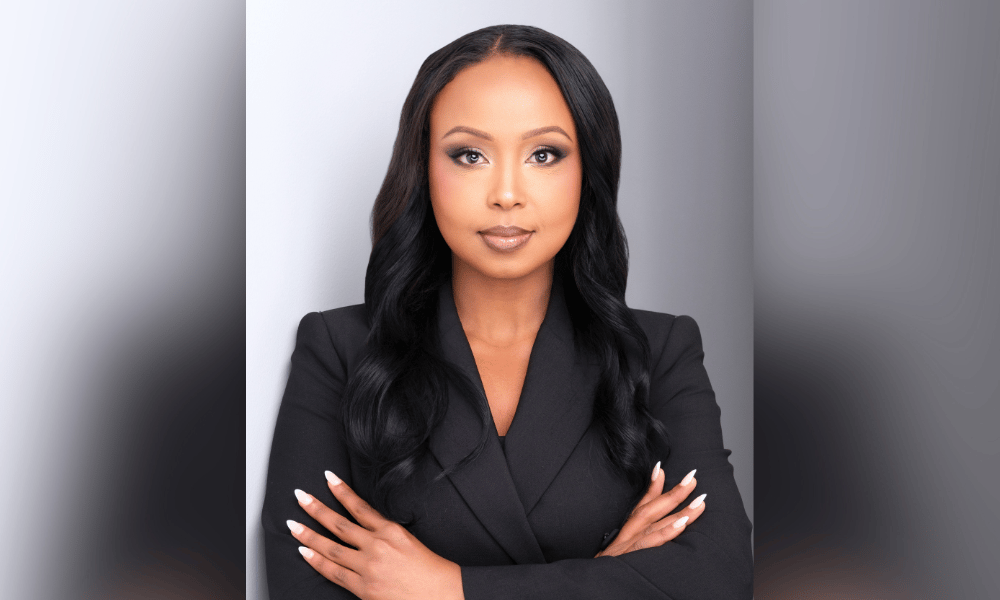
When Mariam Moktar took the helm at the Ontario Bar Association as president on Sept. 1, the Toronto-based lawyer said her mandate was grounded in three principles: certainty, clarity, and comfort.
Explaining those principles to Law Times on Tuesday, Moktar pointed to the uncertainty Ontario’s lawyers are facing amid rapid developments in artificial intelligence, upcoming changes to Ontario’s Rules of Civil Procedure, and economic and political turmoil.
“My goal is really to have lawyers know that whatever they’re facing, whatever changes that may be coming our way, that the OBA is the place that they can turn to,” Moktar says. Over the years, she says, the organization representing more than 17,000 legal professionals across the province has been that place for her.
Noting that she has had to grapple with uncertainty throughout her life, Moktar says she’s resolved to approach the challenges ahead the way she always has: “with optimism and hope.”
The personal uncertainty Moktar refers to began long before she became a lawyer. Moktar was born in Somalia, where she spent her early childhood before the country broke out in civil war. After her father, a police officer, was killed, the family fled.
At the time, “it was such early days that we didn’t even know that it was civil war, how long it would take,” or that the violence would continue, Moktar recalls.
“My mom had to make the tough decision to go back to Somalia, but wanted a bright future for us,” Moktar says. Her mother decided to take some of her nine children with her and sent the others to Canada and the US. Moktar went to Toronto, where her aunt raised her.
Witnessing the breakdown of the rule of law at the start of the civil war propelled Moktar towards an interest in political science, failed states, and law, she says. The experience also eventually shaped her career into one defined by advocacy.
“The rule of law is obviously really important to me,” she says. “And I think as lawyers, we have a responsibility to speak up when the rule of law is challenged.”
Even as a high school student, Moktar was an advocate, serving as a student body president and speaking out on community issues. After law school, she worked at several high-profile boutique law firms, including Lenczner Slaght LLP, before landing her current role at Toronto litigation boutique Paliare Roland Rosenberg Rothstein LLP, where her practice spans commercial and public interest litigation, employment law, human rights law, and administrative law.
In 2015, she co-founded the Canadian Association of Somali Lawyers, which promotes equity and opportunities for Somali-Canadian legal professionals and facilitates access to legal services for the Somali-Canadian community. She has also served in various roles at the OBA, including as treasurer before she was elected second vice-president in 2024.
In practical terms, Moktar’s three principles of certainty, clarity, and comfort will mean expanding the OBA’s continuing professional development and legal technology literacy programming, including a new iteration of the organization’s AI Academy.
The lawyer says the OBA also plans to grow its peer network and provide more mentorship opportunities, and offer new resources to help members navigate professional and personal transitions.
“Certainty isn't just about the law,” Moktar says. “It’s about knowing you have the support when things change.”
The lawyer says she also plans to speak to high schools in Ontario, including her alma mater. “For the high school students, I think it’s important to reach people early before the rule of law feels distant or abstract to them,” Moktar says.
“The rule of law is not an abstract legal principle,” she adds. “It’s really what makes us feel safe and have a plan for the future.”