
Judge sees special or unusual circumstances to deviate from 2.8 percent statutory rate
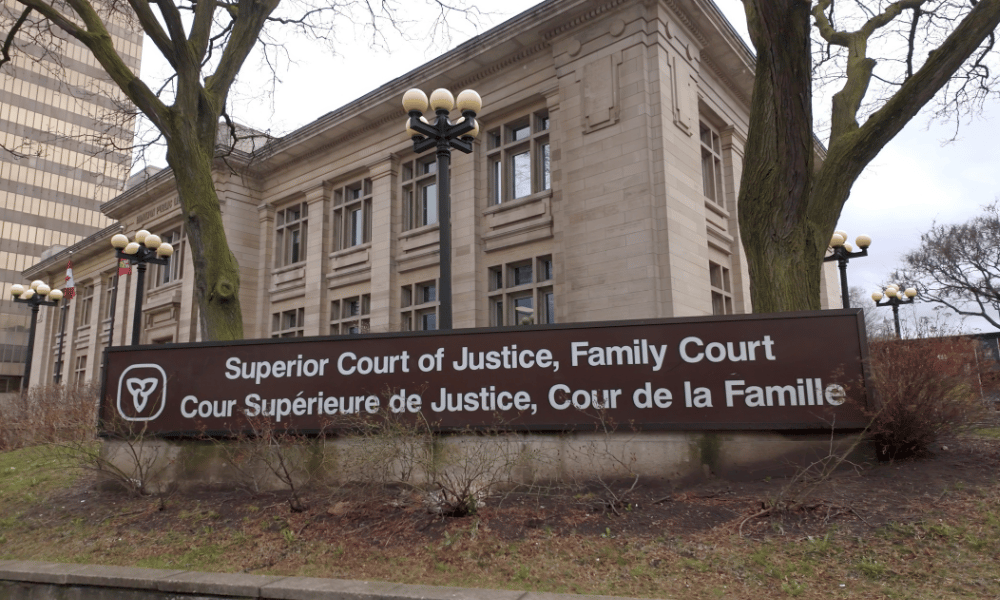
In proceedings arising from a motor vehicle accident, the Ontario Superior Court found special or unusual circumstances to fix the prejudgment interest (PJI) rate at 4.7 percent per annum, up from the applicable statutory rate of 2.8 percent.
The case was Furtado v. DeSousa, 2026 ONSC 6512.
On Nov. 8, 2022, the plaintiff initiated an action seeking damages for injuries. In its verdict last Apr. 17, the jury awarded the plaintiff damages of $415,000, comprising:
Considering the plaintiff’s receipt of $55,760 in income replacement benefits, the net award for past income loss was $19,240.
The parties disputed the relevant interest rate for calculating PJI in connection with non-pecuniary general damages and past income loss.
The plaintiff asked the court to exercise its discretion under s. 130(1) of Ontario’s Courts of Justice Act, 1990, to impose a 5.39 percent rate, which was above the “prejudgment interest rate” or the “statutory rate” in s. 127(1) of the Courts of Justice Act.
The defendant opposed the request and called for the application of the statutory rate.
For this action, the Ontario Superior Court of Justice explained that the statutory rate was 2.8 percent, the rate applicable to the fourth quarter of 2022.
The court noted that the average rate for all 14 quarters leading up to the commencement of trial was 4.16 percent, which would round up to 4.2 percent, according to the definition of “prejudgment interest rate.”
Exercising its discretion, the Superior Court imposed a PJI rate of 4.7 percent per annum.
Citing Fonseca v. Hansen, 2016 ONCA 299, Judge Thomas A. Heeney stated: “Here, the fact that the fourth quarter rate for 2022 of 2.8% was lower than the rate for each and every other quarter until the first quarter of 2026, makes it comparable to a “record low” for that period. At the very least, it could be described as an “outlier”.”
Thus, the Superior Court saw special or unusual circumstances that would warrant departing from the statutory rate.
According to Judge Heeney, “the defendant’s rate of earnings should be doubly weighted in the averaging calculation, since my primary concern is that allowing the defendant to profit from the use of the plaintiff’s money runs contrary to almost all of the purposes of the PJI scheme.”
In choosing the rate it did, the Superior Court said it did not mean to punish the defendant for the conduct of the case. Instead, the court sought to:
The Superior Court found the plaintiff entitled to PJI for four years and six days. Thus, the court fixed the PJI for the $250,000 award for non-pecuniary general damages at $47,193.15.
Regarding the $19,240 award for past income loss, the court set the PJI for four years and six days at $1,816, after dividing the initial amount by two.
Lastly, regarding out-of-pocket expenses, the court imposed PJI for four years and six days at $1,500, as agreed by the parties.
In a prior ruling in this motor vehicle accident proceeding, the court fixed full indemnity costs at $74,934.33 for a defendant who had agreed to pay $150,000 pursuant to a settlement with the plaintiff through a Pierringer agreement.
Following another motor vehicle collision that killed three and injured two others, the court agreed with an automobile insurer that its insured should have notified it about performance modifications aimed at making his sports car faster.
Enjoy this story? Read the latest personal injury law news on the main page!