

Motor vehicle accident took three lives, seriously injured two other people
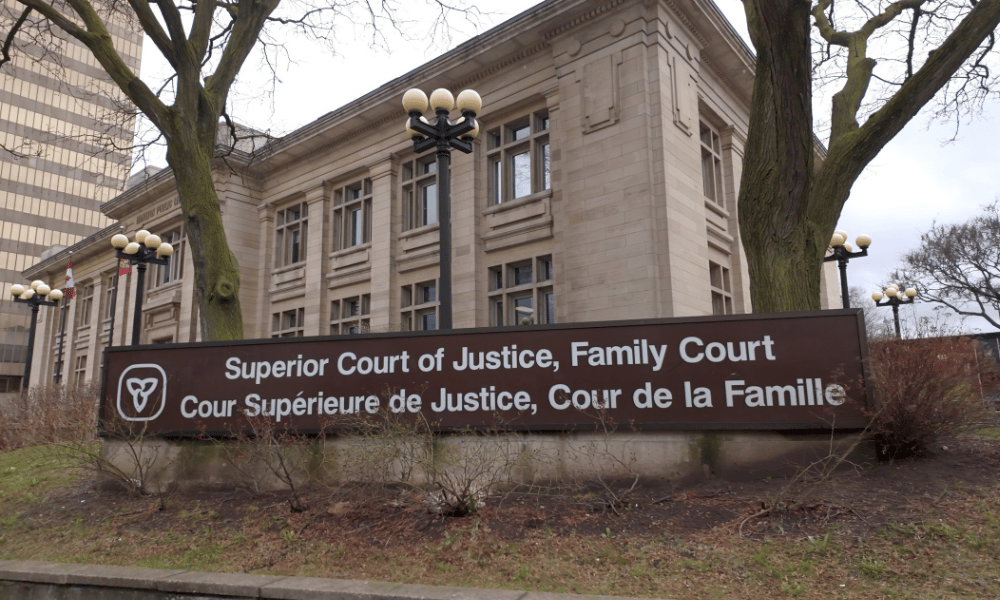
Following a serious motor vehicle collision that killed three and injured two others, the Ontario Superior Court agreed with an automobile insurer that its insured should have notified it about performance modifications aimed at making his sports car faster.
The case was Aviva Insurance Company of Canada v. Cahill, Litigation Administrator, 2026 ONSC 4975.
The respondent purchased a 2011 Chevrolet Corvette. For this vehicle, he completed an automobile insurance application with Aviva in September 2016 and renewed the insurance policy in September 2017. Aviva provided $2 million liability coverage for the Corvette.
In March 2018, the respondent modified the Corvette. Modifications included:
On Aug. 4, 2018, the respondent drove his Corvette at high speed, entered an intersection, and collided with a car making a left turn. A passenger in the respondent’s vehicle sustained serious injuries.
As for the other vehicle, the driver, her son, and one other passenger died. The driver’s daughter, who was also a passenger, suffered non-fatal but serious injuries.
After a trial in October 2021, the respondent received convictions on three counts of dangerous driving causing death and two counts of dangerous driving causing bodily injury.
The deaths and injuries caused by the collision led to four civil actions for damages.
In all actions, the defendants were the respondent and the other driver, except for one action that did not name the deceased driver as a defendant and instead pursued claims arising from her passing under Ontario’s Family Law Act, 1990.
Following the respondent’s death, the court allowed the proceedings to continue against his estate.
Under s. 258(14) of Ontario’s Insurance Act, 1990, Aviva added itself as a statutory third party to the civil actions. Advancing an off-coverage position, the insurer denied an obligation to defend or indemnify the insured.
In May 2024, Aviva initiated the present coverage application. The insurer alleged that it did not need to defend or indemnify the respondent because it would not have insured his vehicle if it had known of the material change in risk.
Aviva asked the court to determine its rights and obligations under the policy. In its request for relief, the insurer also sought declarations:
Ultimately, the Superior Court granted Aviva’s application.
Under s. 1.4.1 of the Ontario Automobile Policy (OAP 1), the Superior Court ruled that the respondent should have notified Aviva about any significant change that might raise the risk of an incident or impact the insurer’s willingness to insure him at the current rate.
Under statutory condition 1 of O Reg 777/93, Statutory Conditions – Automobile Insurance, the court held that the respondent should have informed Aviva about any known material change in risk.
According to two experts who reviewed the adjustments to the vehicle, the performance modifications made the Corvette go faster. The court reasonably inferred that the respondent paid a substantial amount and modified the vehicle for that purpose.
“In my view, any reasonable insurer would consider that as a significant factor in determining whether it wanted to insure the vehicle at all or in setting a higher premium,” wrote Justice M.J. Lucille Shaw for the Superior Court.
Given Aviva’s decline rule 7.2.2, the court determined that the insurer would not have insured the Corvette if the respondent had told it about the modifications.
“The modifications made this a riskier vehicle to insure not only for the speeds it could achieve but also based on the profile of a driver who made those changes and the reasons he did so,” Shaw said.
Considering the respondent’s failure to report the modifications, the Superior Court concluded that:
Here are some other recent Ontario Superior Court decisions involving injuries arising from motor vehicle accidents.
In a motor vehicle collision case, the court issued a Sept. 11 decision summarily dismissing the injured plaintiff’s claim upon finding that he had failed to establish, on a balance of probabilities, an unidentified vehicle’s involvement in the accident.
In a motor vehicle accident proceeding, the court made an Aug. 27 ruling fixing full indemnity costs at $74,934.33 for a defendant who had agreed to pay $150,000 pursuant to a settlement with the plaintiff through a Pierringer agreement.
Enjoy this story? Read the latest personal injury law news on the main page!