

Ruling notes delaying trial preparation wastes time and resources
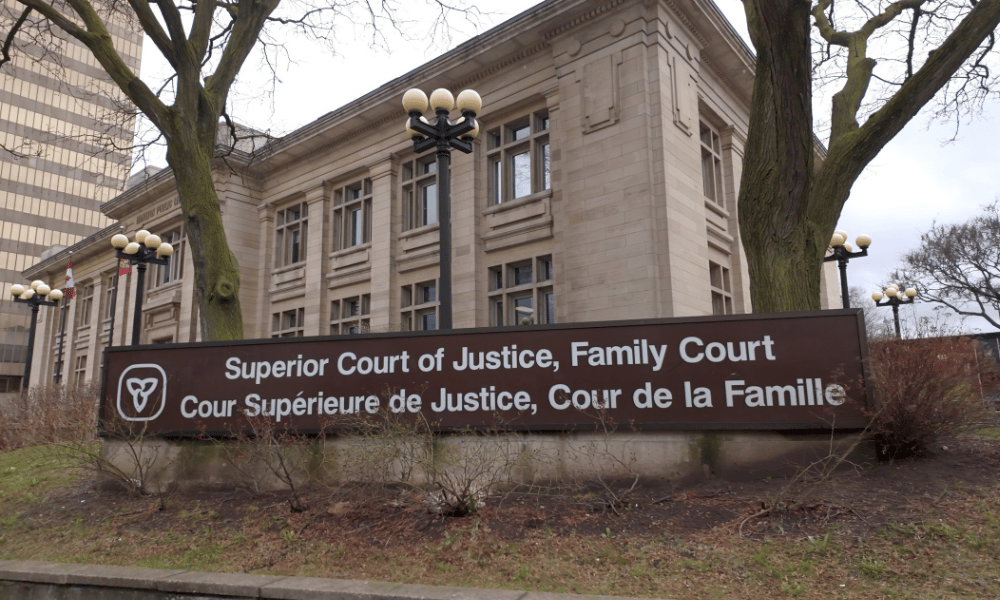
In proceedings arising from a slip and fall case injury, the Ontario Superior Court emphasized that counsel owed duties to their clients, the profession, and the courts, including the duty not to cause systemic harm when conducting cases.
In Hicken et al v. Abbot Chiropractic and Health Care et al, 2026 ONSC 1244, the first plaintiff slipped and fell in the parking lot of her chiropractor. She had a displaced clavicular fracture that required surgeries.
The first plaintiff claimed general damages, as well as damages for loss of competitive advantage and housekeeping. Her mother, the second plaintiff in this case, made a claim for care provided as a claimant under Ontario’s Family Law Act, 1990.
The parties, who disputed liability and damages, requested 20 days of civil jury time. The matter was on the January 2026 trial blitz list.
At an exit pre-trial, held in person on Dec. 30, 2025, the court learned that prior defence counsel had recently gone on leave. New defence counsel from the same firm expressed that he had trial conflicts.
The court adjourned the trial to May 2026 and ordered a trial management conference (TMC) for Feb. 9, 2026.
Counsel attended the TMC without their clients. Defence counsel denied attending the exit pre-trial, then said he had attended too many pre-trials to remember attending the exit pre-trial in person.
The plaintiff’s counsel served a request to admit dated Dec. 17, 2025. According to defence counsel, while he had not reviewed the request to admit, he would deny everything in the request until it was closer to trial, in line with his office’s standard instructions.
The plaintiff’s counsel, who also served a proposed index to a joint document brief dated Jan. 29, 2026, expressed reluctance to shorten and refine it, as suggested by the court, if defence counsel sought proof of every single record for the trial.
According to defence counsel, although he had not read the proposed index, he would consider it closer to trial. He was unprepared or unwilling to discuss the other trial management issues.
Judge Laura B. Stewart of the Ontario Superior Court of Justice ordered the Brampton trial coordinator to call for another exit pretrial three to four weeks before the May 2026 blitz sitting.
The judge acknowledged that the TMC had accomplished nothing. The judge noted that the defence apparently considered it too early to think about the trial, declined to address the issues until it was closer to trial, and rebuffed attempts to narrow the trial issues through the request to admit and the proposed joint book of documents.
The judge determined that the defence took an outdated approach to litigation in the province. According to the judge, leaving all trial preparation to the last minute would waste the court’s and the clients’ time and resources.
The judge held that the defence’s choice to deny everything in the request to admit and plan to revisit the denials at an unspecified future time would increase all parties’ costs and keep an unnecessary number of court days on hold.
The judge found it impossible to determine the necessary number of trial days until the parties decided upon which, if any, documents and facts they could agree. The judge added that this matter took up a 9 a.m. TMC slot and thus denied it to other parties.
The judge accepted that this matter involved a 20-day civil jury trial with two plaintiffs and two defendants. However, the judge stressed that this trial was part of the broader justice system.
The judge explained that trial management aims to decrease wasted court time and accommodate as many cases as possible.