

Two lawyers say the moves do not adequately address calls for an independent investigation
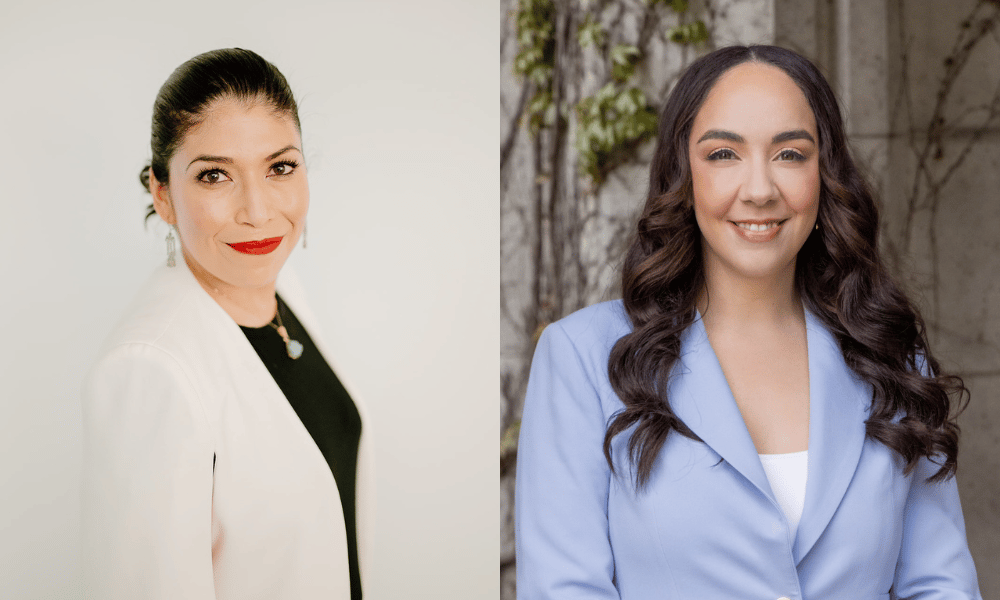
The Durham Regional Police Service announced Thursday that it has reassigned police officers who allegedly assaulted a Black lawyer while she was working at an Oshawa courthouse, in addition to notifying two civilian oversight agencies of the allegations.
The announcement came amid mounting pressure from Ontario’s legal community, whose lawyers and organizations have rallied behind the lawyer, Sudine Riley of Aitken Roberston, accusing the officers of racial bias. Several organizations have called for an independent investigation that DRPS itself won’t conduct.
DRPS said its own investigation of the alleged incident is ongoing.
The two oversight agencies that DRPS notified are the Law Enforcement Complaints Agency (LECA) and the Special Investigations Unit (SIU). While both agencies are tasked with reviewing complaints of police misconduct, LECA reviews general misconduct complaints, and SIU investigates cases that involve serious injury, death, allegations of sexual assault, or the discharge of a firearm by an official at a person. Unlike the SIU, the LECA cannot lay criminal charges.
According to SIU’s website, “serious injury” is defined as one that is “likely to interfere with the person’s health or comfort and is not transient or trifling in nature.” Examples include injuries that result in admission to a hospital; a skull, limb, rib, or vertebra fracture; burns to a significant proportion of a person’s body; the loss of any portion of a person’s body; or a loss of vision or hearing.
DRPS said SIU had declined to look into the alleged incident in Oshawa.
According to a press release issued earlier this week by Riley’s lawyer, Riley was working in an interview room at an Oshawa courthouse on Jan. 23 when two DRPS officers entered the room, “challenged her presence,” slammed her head into a desk, dragged her out of the room, and ripped off her headscarf. DRPS then charged Riley with an offence under the Trespass to Property Act.
Susan Toth, a partner at Spero Law, told Law Times on Thursday that she has multiple concerns about DRPS’s announcement and SIU’s lack of involvement.
The SIU’s definition of an injury is one “that’s likely to interfere with [an individual’s] health or comfort and is not transient or trifling,” Toth says.
“Having your head slammed into a desk while you're just trying to finish up work at the courthouse as a lawyer, to me, falls within that category,” she adds. While SIU has the discretion to determine whether Riley’s injury falls within its purview, Toth says the agency’s involvement “would be a sign that this is being taken really, really seriously.”
Toth, who served on a civilian oversight body for the London Police Service between 2017 and 2023, questioned why DRPS indicated that it only contacted SIU “because of information contained in the media.”
But she argues that another oversight body should also be weighing in: the Durham Regional Police Service Board. Like the board she previously served on in London, the seven-member DRPS board’s responsibilities include monitoring the performance of the DRPS chief of police and establishing policies to manage the police service.
The board is responsible for governance rather than operational matters, but Toth argues that the incident involving Riley falls squarely within its governance role. In a letter she sent to the board on Thursday, Toth urged the board to “take an active and proactive role in this incident.
“You are the oversight body. You are the link between the community and the police. It is for the DRPSB to ensure that the Chief of Police refers this matter to an outside agency for an impartial investigation, and to ensure the Chief of Police holds all those who participated in this incident accountable and appropriate corrective action taken,” Toth wrote.
“Your silence and lack of oversight will lead to the erosion of public confidence in the police and will send a chilling message, especially to racialized men and women, and in particular, any racialized person who must go to court, either as a lawyer or member of the public,” Toth added.
The board did not immediately respond to a request for comment.
Cassandra DeMelo, president of Women In Canadian Criminal Defence, an organization of which Riley is a member, also expressed concerns about the DRPS announcement.
“It is welcome news to hear that the officers involved have been removed from the courthouse for the time being. As defence lawyers, we perhaps of all justice participants understand most intimately the right to due process,” she says. However, she adds, “confirmation that DRPS is not investigating their own officers is the missing vital piece."
On Wednesday, WiCCD notified the executive legal officers of the Ontario Court of Justice, Ontario Superior Court of Justice, and Ontario Court of Appeal that the incident involving Riley had caused its members to fear for their physical safety. WiCCD said that if its members, who are criminal defence lawyers, request to attend hearings virtually rather than in person, the court should not ask the lawyers to provide a reason why.
A spokesperson for all three courts told Law Times that “the safety of Ontario’s courthouses, and the people who work in them and attend them, is fundamentally important to the preservation of a fair and accessible justice system and to the rule [of] law.”
The spokesperson declined to comment on the Oshawa incident because it is under investigation.
On Thursday, the Canadian Bar Association and the Advocates' Society were among the latest legal organizations to issue statements calling for an independent investigation.
According to the Criminal Lawyers’ Association, members of the defence bar have organized a sit-in in support of Riley to take place at the Oshawa courthouse on Friday.