

Issue in suit brought by passenger is which of two drivers is liable
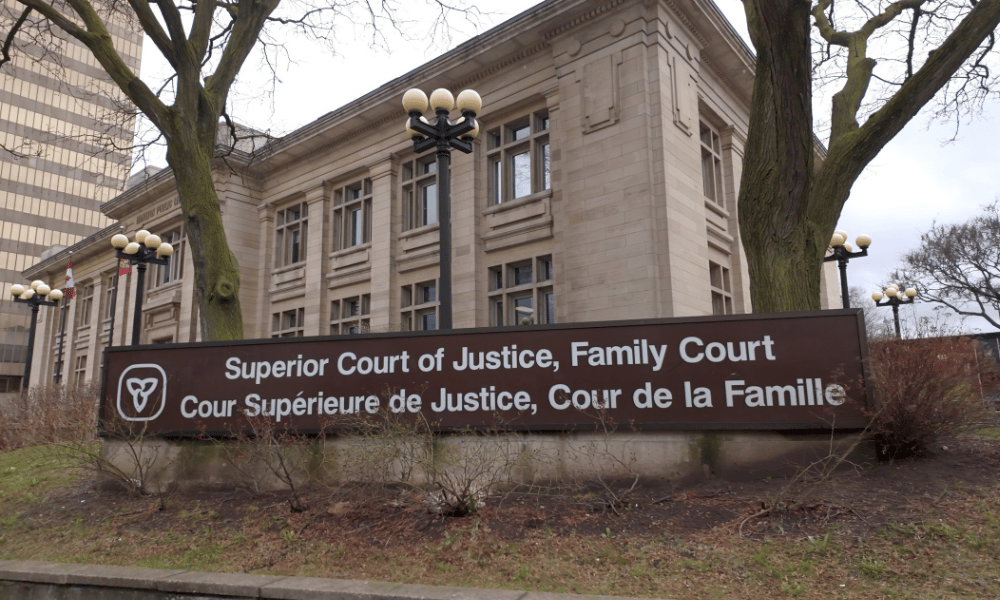
To avoid the real possibility of inconsistent results, the Ontario Superior Court ordered one common liability trial in two actions with identical liability issues on which of the two drivers involved in a motor vehicle collision was liable.
Hollywood v. Kehoe, 2026 ONSC 3808, involved a July 27, 2018, collision between a vehicle driven by the first defendant and a vehicle driven by the second defendant, in which the plaintiff was a passenger.
The plaintiff commenced an action (CV-20-201) against both defendants. The second defendant brought three separate actions (CV-20-211, CV-20-306, and CV-20-365) against the first defendant and multiple highway contractors.
The second defendant later discontinued the actions against the contractors, with only the action (CV-20-211) against the first defendant remaining.
On Oct. 31, 2025, following a civil trial management court hearing for CV-20-201, Judge Kristin Muszynski refused to set dates for the following reasons:
After joint case management conferences, the court streamlined the issues so that both actions would more or less catch up with each other by the end of this year.
According to Muszynski, the only logistical issue left was how to schedule the two actions for trial. Because the parties disagreed, the plaintiff moved to obtain court directions regarding the trial schedule.
In connection with the jury notices in both actions, the parties discussed the possibility of a judge-alone trial for the liability issue. The parties did not suggest that the plaintiff, a mere passenger, bore any responsibility or contributory negligence for the collision.
Judge Muszynski of the Ontario Superior Court of Justice ordered:
Given the valid jury notices, the judge scheduled the common liability trial as a jury trial at this time. However, if all parties agreed, they could convert it to a judge-alone trial, while being able to proceed to damages trials by jury.
The court considered the liability and damages issues clearly severable. The court noted that the two actions had no common witnesses relating to damages.
If the court did not find the first defendant liable at all, that outcome could substantially decrease trial time because the court would entirely dismiss CV-20-211, without needing a damages trial in that action, and would proceed to the damages trial only for CV-20-201.
If the first defendant were partly or entirely responsible for the collision, the court would need to hold damages trials for both actions. However, even in this scenario, the parties would save substantial legal costs by litigating damages in separate trials, rather than a combined lengthy trial.
In this climate and jurisdiction, the court concluded that significant challenges would arise if it removed a judge from circulation and made the judge preside over a joint six-week civil jury trial.
The court added that it could sooner offer and could more readily accommodate separate, shorter trials, with less impact on the region as a whole.